

Connect
Research that changes the question.
Softa's research direction connects privacy, AI authority, search evidence and local economic participation with the decisions behind its products. The question is not only what technology can do, but under what conditions it should do it.
A research-to-decision relationship
The research operating system connects a question to prior work, a permitted method, a result and its relevance to an institutional decision. Negative findings and rejected hypotheses belong in that relationship. Their value lies in improving judgement, not only in producing an attractive publication.
For Softa, recurring questions concern how capabilities can cooperate without a universal profile, how multilingual assistance can preserve meaning and authority, and how local knowledge can improve services without losing its source rights. Engineering choices, operating cost and safety conditions remain part of the inquiry.

EXTERNAL PUBLICATION · 3 SEPTEMBER 2026
India's AI-Era National Trust Architecture
Displayed publisher byline: Rohit Sen Gupta. A public-policy edition on trust, digital dignity, AI and democratic digital sovereignty.
Read morePrivacy, intelligence and evidence
Purpose separation provides a systems question: how do source restrictions remain effective when a task moves across products? Bounded AI provides an authority question: how are permission to access, remember and act kept distinct? Search provides an evidence question: how does a generated explanation remain accountable to its source and date?
These areas overlap without becoming interchangeable. A privacy principle does not establish a cryptographic protocol. A model's fluency does not establish factual support. A useful research programme keeps the method and limitations attached to the result it produces.

Knowledge and communities
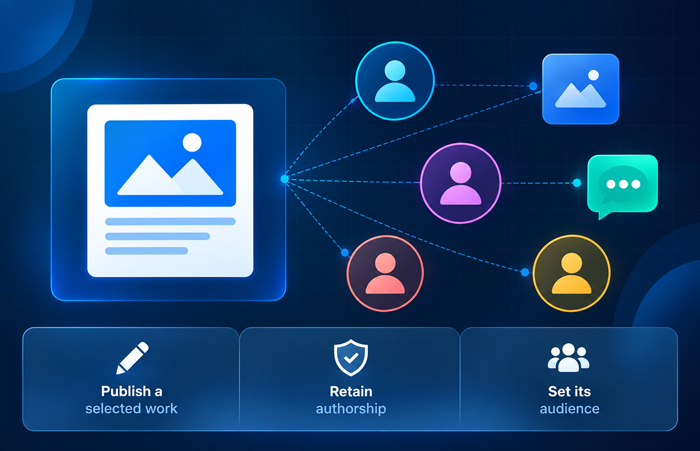
The HOLA framework recognises that oral traditions and local knowledge retain cultural context and source authority. Capture, archive access, model training, publication and commercial use are separate permissions. Attribution and agreed reciprocity can be material parts of the relationship.
The research direction does not require all knowledge to be made public. Sensitive or sacred material may need restrictions or exclusion from model use. A synthetic reconstruction cannot be substituted for authentic community testimony.
Reading the collection
The selected publication is available through Datawatchdog under the displayed byline Rohit Sen Gupta. Its public edition connects national trust, digital dignity and regional participation with a longer Digital-Swaraj horizon. The linked publication record preserves its authorship context and directs readers to the original text.
Six SOFTA Perspectives examine visibility, private communication, evidence, memory, merchant identity and frugal engineering. These institutional essays set out the company's thinking; they are distinct from independent journalism and peer-reviewed research.